

Key Takeaways A successful aesthetic clinic Instagram marketing plan connects useful content with a clear, low-friction booking journey. The goal is not simply to collect followers, but to build enough trust that the right people feel comfortable taking the next step. Define goals around qualified enquiries, consultations, and bookings. Make your profile immediately clear, credible, […]
A successful aesthetic clinic Instagram marketing plan connects useful content with a clear, low-friction booking journey. The goal is not simply to collect followers, but to build enough trust that the right people feel comfortable taking the next step.
A clinic needs a clear reason for showing up on Instagram. Before planning posts, decide what the channel should help achieve and which patients you want to reach. A focused strategy also makes it easier to choose useful topics, maintain a consistent voice, and judge whether your work is producing meaningful progress.
Start with outcomes that connect to the clinic’s commercial reality. You might want more consultation requests for a particular treatment, more profile visits from people in your service area, or a lower cost per qualified enquiry. Set a baseline for each measure and review it over a defined period rather than reacting to the performance of one post.
A practical plan usually includes a small group of goals that can be tracked consistently:
These goals keep content decisions grounded. A post can be valuable even when it does not receive the most likes, especially if it prompts a relevant question or leads someone toward a consultation.
Different patients arrive with different concerns, budgets, levels of knowledge, and timelines. Someone researching skin texture may need educational reassurance, while someone who has already chosen a treatment may want practical information about availability and consultation steps. Group your audience by need and intent rather than relying only on age or gender.
Review the questions your team hears repeatedly. The language patients use at reception, in consultations, and in DMs can become the basis for captions and video scripts. It also helps you avoid vague content that tries to speak to everyone and ends up feeling relevant to no one.
Content pillars give the account a dependable structure without making every post feel identical. Useful pillars might include treatment education, realistic expectations, practitioner expertise, clinic experience, aftercare, and answers to common concerns. Each pillar should support a service or a stage of the decision process.
For example, an educational post can help a new visitor understand whether a consultation is appropriate. A behind-the-scenes post can make the clinic feel more familiar, while an aftercare post can demonstrate thoughtfulness beyond the appointment itself. The strongest mix gives people reasons to trust the clinic before asking them to book.
Aesthetic clinics often benefit from a calm, precise, and reassuring voice. Avoid exaggerated promises and overly technical explanations; patients need clarity more than spectacle. Decide how the clinic will describe treatments, discuss risk, and invite questions, then apply those choices across captions, Stories, and replies.
Visual consistency matters too. Use a repeatable color palette, image treatment, typography, and framing style, while keeping the feed human rather than overly polished. Consistency builds recognition and makes a smaller account feel considered without requiring every post to look like an advertisement.
Your profile is often the first place a prospective patient evaluates the clinic. It should answer three questions quickly: what do you offer, where are you located, and what should a visitor do next? Small improvements to the bio, highlights, and links can remove uncertainty before a person sends a message or leaves the page.
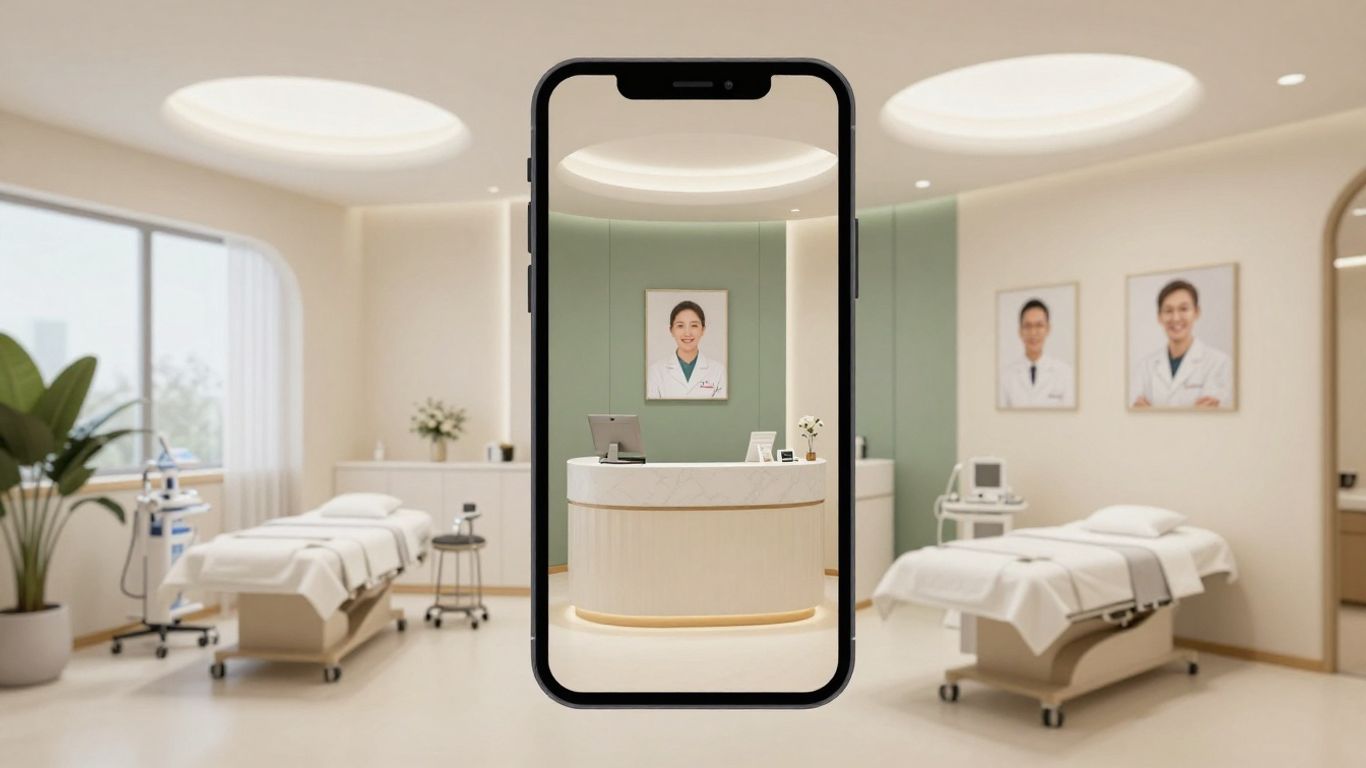
Use the bio to state the clinic’s services or area of expertise in plain language. Include the location or service area, a concise description of the patient experience, and a direct next step such as booking a consultation. Avoid filling the limited space with slogans that sound attractive but do not tell visitors what the clinic actually does.
The name field can also support discoverability when it includes a clear service description, provided it remains accurate. Make sure the profile category and contact buttons are current, and check how the bio reads to someone who has never heard of the clinic.
A simple logo or recognizable clinic mark usually works better than a detailed photograph at the small profile size. Highlights should be organized around patient questions, not internal departments. Consider sections for treatments, practitioners, clinic information, FAQs, aftercare, and consultation details.
Keep covers visually related but make the labels understandable. A visitor should not have to tap through several vague highlight names to find pricing guidance, location details, or information about what happens during a first appointment.
The link in your profile should lead to a useful next step, not a crowded page with every possible destination. If you offer several treatments, use a simple landing page that lets visitors select the relevant service while keeping the main booking action prominent. Test the path on a phone, since most Instagram visits happen there.
A basic journey can be mapped before you publish or promote a post:
| Instagram action | Helpful destination | What to measure |
|---|---|---|
| Visits the profile | Service or booking page | Link clicks |
| Taps a treatment link | Treatment information | Landing-page engagement |
| Starts a booking | Consultation form or scheduler | Completed bookings |
| Sends a question | DM or contact route | Qualified enquiries |
This structure makes gaps easier to spot. If profile visits are strong but link clicks are weak, the bio or call to action may need work; if clicks are healthy but bookings are low, inspect the booking experience rather than simply posting more.
Trust signals should be specific and easy to verify. Mention relevant practitioner credentials, the clinic’s location, consultation availability, and any professional memberships or standards that genuinely apply. Include clear directions or a location tag where appropriate, especially if patients travel from nearby districts.
Do not imply outcomes that cannot be guaranteed. Accurate information, visible expertise, and a transparent explanation of the consultation process are more persuasive over time than dramatic claims.
People rarely book an aesthetic treatment after seeing one isolated post. They usually move through a period of curiosity, comparison, questions, and reassurance. Content should support that process by explaining what a treatment involves, setting realistic expectations, and making the clinic’s approach visible without pressuring every viewer to buy.
Start with the question behind the treatment rather than the treatment name alone. Explain who may consider it, what the consultation covers, what the experience may involve, and what questions a patient should ask. Keep technical terms only when they add precision, and define them when they appear.
A useful post does not need to answer every medical question. It should give enough context for a reader to understand whether they need further guidance and where that guidance comes from. This is also a natural place to direct people toward a consultation rather than making an assessment in the comments.
Before-and-after posts need careful consent, consistent photography, and clear context. Explain the treatment or timeframe where appropriate, avoid misleading angles and lighting, and do not suggest that one person’s result is typical for everyone. Follow the advertising and professional rules that apply in your location.
The caption should focus on the patient journey and realistic expectations, not just the visual difference. A transparent explanation of what was done and why can be more informative than a heavily edited image, and it gives prospective patients a better basis for asking questions.
Educational content works best when it responds to a real hesitation. Topics may include preparation, downtime, discomfort, suitability, aftercare, treatment frequency, or when to seek professional advice. Organize each post around one question so that the answer remains easy to follow and share.
A clinic can also explain what it cannot determine through Instagram. That boundary is useful: it protects patients from casual diagnoses and shows that the practice takes proper assessment seriously. For ideas on communicating responsibly, see this compliant content guidance.
Promotional posts have a place, but a feed made entirely of offers can feel transactional. Mix announcements with practitioner introductions, room preparation, equipment maintenance, staff routines, and small details that show how the clinic operates. These moments make the service more tangible without making unsupported promises.
Behind-the-scenes content should still respect patient privacy and consent. A clean, calm glimpse of the environment can answer practical concerns about comfort and professionalism while preserving the clinical focus of the account.
Each Instagram format gives the clinic a different way to communicate. Reels can introduce a question or idea quickly, Stories can invite low-effort interaction, and carousels can organize information for people who want to read at their own pace. The format should follow the message, not the other way around.
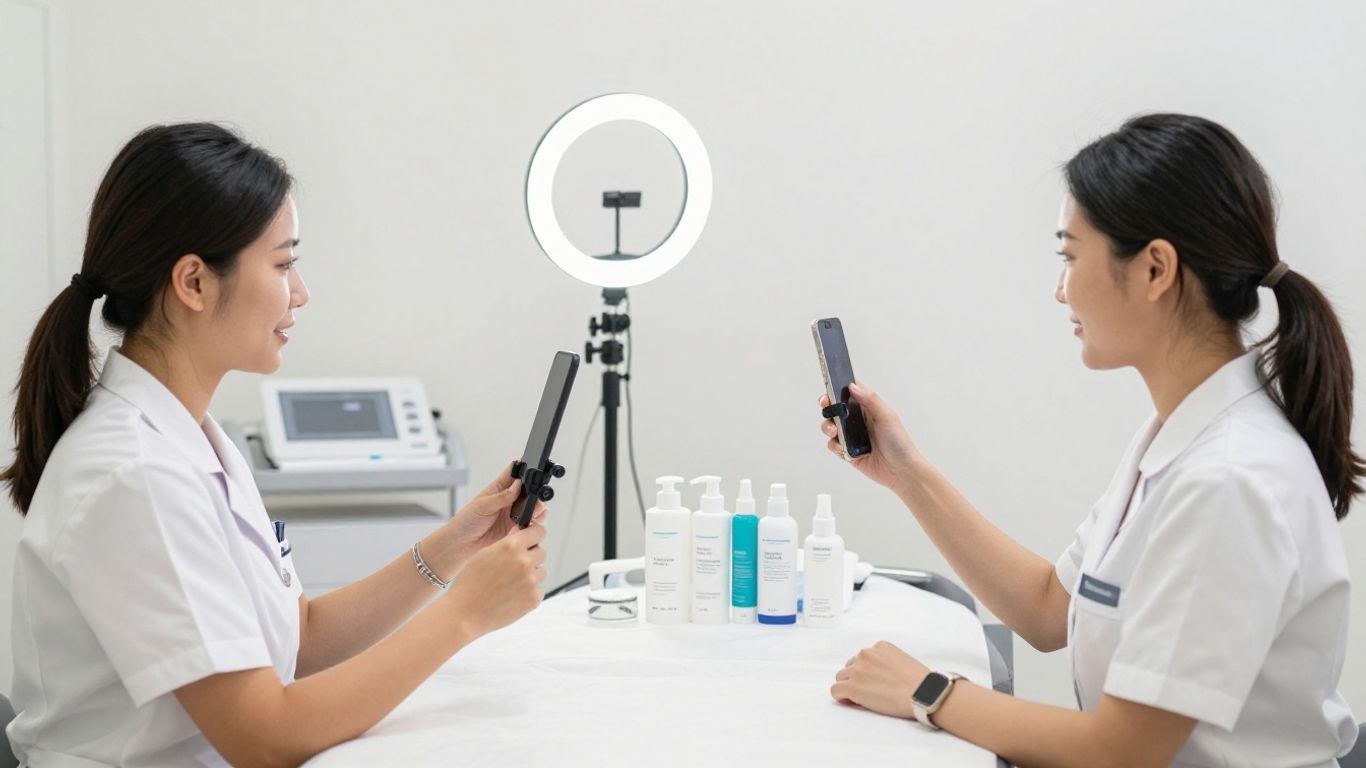
A strong Reel often begins with a question patients already ask. A practitioner can answer one misconception, explain a consultation step, or clarify what a treatment is and is not designed to do. Keep the opening focused, use captions for accessibility, and end with a simple invitation to learn more or submit a question.
Avoid chasing trends that make a clinical topic seem frivolous or encourage unrealistic expectations. Short videos can be warm and approachable while remaining accurate. They can also direct viewers to a longer carousel or a booking page when the topic needs more context.
Stories are useful for small, regular interactions rather than polished announcements alone. Share availability when appropriate, introduce the team, answer a recurring question, or invite followers to submit topics for future education. Keep the sequence short enough that the main point is not buried.
Question stickers, polls, and replies can reveal what your audience wants to understand. Treat those responses as research, not as permission to give personal medical advice in public. Repeated questions can then become clearer feed content.
Carousels suit topics that benefit from sequence and structure. Use the first slide to state the question, then give each following slide one useful idea. A final slide can explain when to seek professional advice or suggest booking a consultation for a personal assessment.
Readable design matters more than filling every slide. Use generous spacing, concise sentences, and a consistent visual system. If a reader saves the post to revisit later, that is a stronger sign of usefulness than a quick double-tap alone.
Repurposing does not mean copying the same post everywhere. Turn a well-received carousel into a short Reel, use a common question from its comments in Stories, or expand one slide into a practitioner-led explanation. Keep the core answer consistent while adapting the pacing and visual language to each format.
Review why a piece performed well before repeating it. The topic, opening line, timing, presenter, or call to action may each have played a role. This approach is more reliable than assuming every trend can be reproduced.
Attention becomes useful when the next step is clear. A prospective patient should know how to ask a question, what information the clinic can provide, and how to move from Instagram to a proper consultation. That path should feel helpful rather than like a series of forced sales prompts.
A caption should usually ask for one action, not several competing ones. Depending on the post, invite readers to save the information, send a question, visit the booking link, or share the post with someone who may find it useful. Make the instruction specific and match it to the reader’s level of intent.
For example, an educational post may invite questions, while a post about appointment availability can direct people to the booking page. Clear language reduces hesitation and gives the team a better basis for evaluating which content creates genuine interest.
A thoughtful response can determine whether curiosity continues or disappears. Set expectations for response times, give the team approved information for common questions, and move personal or clinical discussions into an appropriate private process. The reply should be courteous, concise, and never imply an assessment has been made without a consultation.
Messages can also reveal friction in the booking journey. If people repeatedly ask where the clinic is, what a first appointment involves, or how to book, update the profile and content so those answers are easier to find. A useful guide to the Instagram enquiry flow can help frame this handoff from interest to consultation.
Interactive stickers make it easier for quieter followers to participate. Ask which topic they would like explained, test basic knowledge about preparation, or invite questions about the consultation process. Keep questions neutral and avoid collecting sensitive health details in a public Story response.
The value is not only the immediate engagement. The answers show which subjects need clearer content and which concerns may be preventing people from taking the next step. Use those signals to refine the calendar rather than treating them as vanity metrics.
Check every route a patient might take: a profile button, Story link, direct message, and paid post. The destination should load quickly, explain what happens next, and request only information that is necessary at that stage. If someone needs to contact the clinic before booking, make that option visible without hiding the primary route.
Track where enquiries originate so the clinic can compare content with actual consultations. A simple process is often enough at first, provided staff know who responds, what gets recorded, and how urgent or clinical questions are handled.
Paid promotion can extend the reach of useful content, but it should support a considered patient journey. Start with the service area, the treatment interest, the offer or educational message, and the action you want people to take. Advertising should not compensate for a confusing profile or a booking process that is difficult to complete.
Match the objective to the stage of intent. Awareness may suit a clinic introducing itself locally, while traffic or lead-focused activity may be more appropriate when the profile and landing page are ready. A consultation campaign needs a clear response process behind it, including timely follow-up and accurate recording.
Define what counts as a useful result before spending begins. A large number of clicks may be less valuable than a smaller number of relevant enquiries. This Instagram advertising strategy offers a related framework for connecting visual promotion with local patient acquisition.
Location is usually central for a clinic, but excessive audience restrictions can make delivery expensive and limit learning. Begin with a sensible service radius and a clear treatment message. Use creative and landing-page language to help attract the right people rather than stacking too many assumptions into the targeting.
Review the quality of responses, not just the size of the audience. If the clinic serves several nearby communities, separate campaigns or creative variations may clarify which areas respond best without prematurely excluding potential patients.
A person interested in skin treatments may not respond to the same message as someone researching injectables or body treatments. Build separate creative angles around the questions, expectations, and consultation needs associated with each service. Keep claims accurate, use appropriate consent, and make the destination page match the ad.
A useful ad can be simple: explain the concern, introduce the consultation, and show why the clinic is a credible place to ask questions. Avoid implying that a particular result is guaranteed or that every viewer is suitable for the treatment.
People who watched a video, visited a profile, or interacted with content may need more information before booking. Retargeting can remind them about a consultation or a helpful explanation, but frequency should remain controlled and messaging should not imply knowledge of a person’s private medical situation.
Use platform permissions, local rules, and the clinic’s privacy policies as practical boundaries. Retargeting should feel like a relevant continuation of the conversation, not an unsettling reminder that someone has been observed.
Measurement gives the clinic a way to separate useful signals from surface-level activity. Reach and engagement can show whether content is being seen and understood, but enquiries, consultations, and bookings show whether the wider journey is working. Record results consistently so decisions are based on patterns rather than isolated successes.
Monitor reach, video views, saves, shares, comments, profile visits, link taps, and direct messages. Consider the purpose of each format: saves may matter for an educational carousel, while profile actions may matter more for a service introduction. Look at trends over several weeks and compare similar types of content.
For a broader view of measurable patient acquisition, review these marketing performance metrics. The point is not to chase every number, but to understand which actions indicate genuine movement toward a conversation.
Connect Instagram activity with the clinic’s enquiry and booking records where possible. Track the source, treatment interest, response time, consultation outcome, and advertising cost. This helps distinguish low-quality form fills from enquiries that are relevant and properly followed up.
Cost per consultation is often more useful than cost per click when the clinic’s goal is appointments. The figure still needs context, including staff capacity, treatment mix, and the quality of the patient experience after booking.
Insights can show which topics and formats attract attention from the intended audience. Look for repeated patterns: perhaps practical aftercare posts earn saves, practitioner videos generate questions, or local clinic content produces profile visits. Do not assume the most visible post is automatically the best business asset.
Read comments and messages alongside the numerical data. A post with modest reach may reveal a valuable objection or generate a high-quality consultation request. Those qualitative signals often explain why a metric moved.
Change one meaningful variable at a time when possible. Test two openings for a Reel, compare a carousel with a single image, or use different calls to action on similar educational posts. Keep the subject matter reasonably comparable so the result is easier to interpret.
Allow enough time for a pattern to emerge, then keep what improves useful actions and retire what does not. A social media strategy for clinics can provide additional context for focusing on measurable acquisition instead of follower counts alone.
Aesthetic clinic Instagram marketing works best when every part of the account supports the same patient journey: clear positioning, useful education, credible presentation, responsive conversation, and an easy route to consultation. Start with a manageable set of services and measures, learn from real questions, and improve the experience between the first profile visit and the booked appointment.
Choose a schedule the clinic can maintain without lowering quality or delaying patient care. A consistent mix of feed posts, Reels, and Stories is generally more useful than publishing heavily for one week and disappearing for the next.
Content that answers real patient questions tends to be useful across the decision journey. Treatment explanations, realistic expectations, practitioner-led education, aftercare guidance, and respectful behind-the-scenes material can all support trust.
Before-and-after content can be informative when it uses appropriate consent, consistent photography, accurate context, and realistic language. Clinics should follow applicable advertising, professional, and privacy requirements and avoid implying that one result is guaranteed.
Give each post a relevant next step, respond promptly to genuine questions, and make the booking route easy to find on mobile. The clinic should also track enquiries through to consultations so it can identify and fix points of friction.
Stories can keep the clinic familiar between feed posts and create low-effort ways for followers to ask questions or express interests. They work best when interactions lead to useful follow-up content or a clearly explained consultation path.
Paid ads can help a clinic reach more relevant local people when its profile, creative, landing page, and follow-up process are ready. Start with a defined objective and judge performance by qualified enquiries or consultations rather than reach alone.
The most useful measures depend on the goal, but clinics should usually connect reach and engagement with profile actions, link taps, qualified enquiries, bookings, and cost per consultation. Reviewing these together gives a clearer picture than likes or follower growth alone.
Singapore SMEs & clinics
Talk to Adrian, the founder. Tell us your goals and budget. We will tell you straight what we would do first, and what we would not spend money on. See a real result: 2.8× more enquiries for a Singapore clinic →


