

Key Takeaways A dental marketing agency singapore can help a clinic build a clearer path from online discovery to a booked appointment. The strongest programmes connect useful content, local visibility, paid campaigns, and careful measurement rather than treating each channel as a separate task. Build a fast, useful website that answers patients’ practical questions. Improve […]
A dental marketing agency singapore can help a clinic build a clearer path from online discovery to a booked appointment. The strongest programmes connect useful content, local visibility, paid campaigns, and careful measurement rather than treating each channel as a separate task.
A dental marketing agency helps turn a clinic’s online presence into a more organised patient-acquisition system. That may involve the website, search visibility, advertising, enquiry handling, and reporting. The work should reflect the clinic’s location, treatment mix, capacity, and commercial priorities. It should also leave room for clinical teams to focus on patient care rather than daily campaign administration.
Dental marketing has a particularly local and decision-led character. A patient may search for a clinic close to home or work, compare reviews, check treatment pages, and decide whether the practice feels approachable before making contact. They may also be weighing routine care against a significant expense, such as implants, orthodontics, or cosmetic treatment.
That makes clarity especially valuable. The website needs to explain what happens next, while advertising and search content should match the patient’s stage of consideration. A message designed for someone with a sudden toothache should not be presented in the same way as one aimed at a person researching veneers over several weeks.
The right mix depends on the clinic, but most practices need connected activity rather than isolated deliverables. A useful starting scope commonly includes:
These services work best when they share one patient journey. For example, an advert should lead to a relevant page, the page should make contact straightforward, and the resulting enquiry should be recorded in a way that allows the clinic to judge its quality. A broader performance marketing approach can help bring those moving parts into one plan without making promises that the data cannot support.
Outsourcing can make sense when a clinic needs specialist skills but does not have enough consistent work for a full-time marketer. Campaign setup, conversion tracking, technical search work, creative testing, and performance analysis each require different experience. An in-house coordinator may still be useful for approvals and patient-facing follow-up, while an external team handles the more technical or time-intensive work.
The decision should be based on workload and accountability, not simply on headcount. Ask who will manage the account, who owns the data, how often changes are made, and whether the team can explain results in commercial terms. Clear access and transparent reporting are good safeguards when work is outsourced.
A new clinic often needs the basics established in the right order: accurate service information, a credible website, local listings, tracking, and a sensible initial campaign. An established practice may have more useful data but also more clutter, such as duplicated pages, inconsistent messages, or campaigns that generate enquiries without enough insight into appointment quality.
In both cases, the agency should begin with an honest assessment. The plan may prioritise foundation work before spending heavily on advertising, or it may identify an existing campaign that can be improved quickly. Qualified patient enquiries matter most when deciding whether an activity deserves more budget.
A clinic’s digital foundation is the part patients experience before they ever speak with reception. It should be easy to use, reassuring without being overblown, and specific enough to answer real concerns. Strong foundations also make later advertising and measurement more reliable. Without them, more traffic can simply mean more confusion.
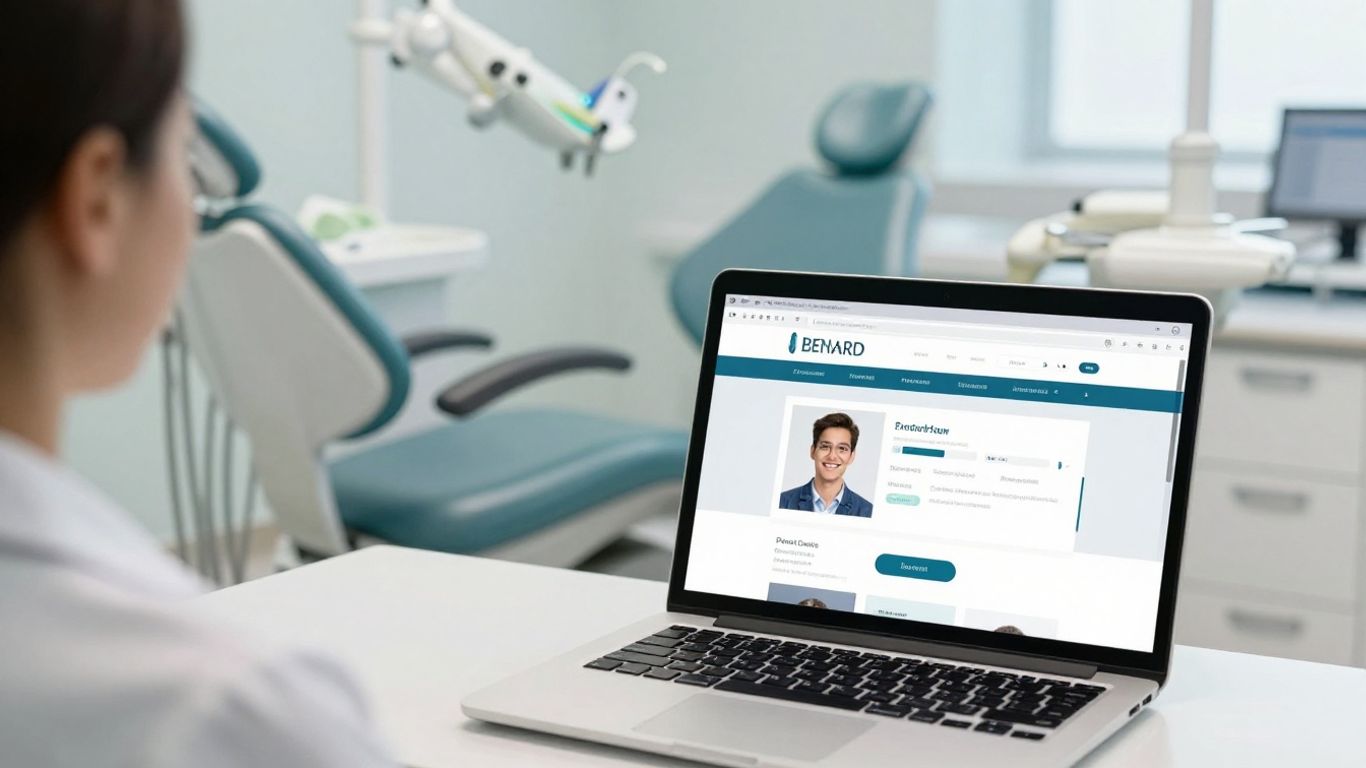
A patient-focused website starts with the questions people actually ask. They want to know which treatments are available, where the clinic is, what an appointment involves, how to request a consultation, and sometimes what payment or financing options may exist. Pages should use plain language while preserving the clinical accuracy that patients need.
The site should also make the clinic feel real. Introduce the practitioners appropriately, show the environment where suitable, explain the patient experience, and provide clear contact details. Avoid filling pages with generic assurances that could describe any practice in Singapore.
Many dental searches happen on a phone, often when a person is travelling or trying to solve an immediate problem. A slow page, tiny text, awkward menus, or a form that does not work well on mobile can undo the value of a good campaign. Speed and usability are therefore part of marketing performance, not just technical housekeeping.
Review the experience on an ordinary mobile connection, not only on a fast office network. Compress large images, remove unnecessary scripts, keep navigation predictable, and make tap targets comfortable. Small improvements can reduce friction for people who are already uncertain about contacting a clinic.
A landing page should give one treatment or patient need enough room to be understood. A page for dental implants, for instance, may explain suitability, the broad stages of care, consultation expectations, and the next step without trying to cover every service the clinic offers. The page should connect naturally to the wording and intent of the campaign sending visitors there.
Keep the call to action visible without making the page feel aggressive. Include practical details such as location and enquiry options, then review whether visitors scroll, interact, and submit forms. A treatment page that attracts relevant visitors but leaves them unsure what to do needs a content adjustment, not automatically a larger advertising budget.
Measurement should be planned before campaigns go live. Define what counts as a meaningful conversion, such as a completed enquiry form, a tracked phone call, or an online booking. Where possible, connect those actions with appointment outcomes so the team can distinguish a genuine opportunity from a low-quality contact.
Tracking also needs regular checks. Test forms, call events, booking confirmations, and thank-you pages after website changes. If a clinic cannot see where enquiries came from or whether tracking still works, campaign decisions will be based on partial information.
Patients commonly choose a dental clinic based on convenience and confidence together. Local visibility helps a practice appear when someone searches from a nearby neighbourhood, workplace, or transport route. It is not a shortcut to instant results; profiles, pages, reviews, and references need to reinforce one another. Accuracy matters because a small inconsistency can make a clinic seem less dependable.
The clinic’s Google Business Profile should have the correct name, address, phone number, opening hours, website, categories, and service information. Add recent, suitable photographs and keep the details current when hours, practitioners, or locations change. A profile is more useful when it helps a patient decide whether the clinic fits their immediate needs.
Monitor calls, direction requests, website visits, and the search terms that bring people to the profile. These signals do not replace appointment data, but they can reveal whether local awareness is growing and which information patients seek most often.
Location-based phrases should reflect how patients in Singapore search, not just how a clinic describes itself internally. Consider combinations of treatment, intent, and area, while avoiding a page for every conceivable neighbourhood if those pages would contain thin or repeated content. A smaller set of genuinely useful pages is usually easier to maintain and more credible to readers.
Write for the patient first. Mention nearby areas, transport access, and the clinic’s actual service coverage where relevant, but do not force place names into every sentence. Search visibility is more sustainable when the page answers a local question rather than merely repeating a keyword.
Citations are references to the clinic’s basic details across suitable directories and local sources. They should be consistent and worth maintaining, rather than created in bulk without checking quality. Relevant links may come from professional associations, local organisations, community resources, or genuine educational relationships.
A link is most useful when it makes sense to the reader who follows it. Review referring pages periodically and correct outdated information. This measured approach is preferable to chasing large numbers of questionable listings that may create more administration than value.
Reviews can reduce uncertainty, especially for someone comparing unfamiliar practices. Ask for feedback ethically and at an appropriate point in the patient journey; never pressure people to leave a particular rating or disclose private treatment details. Respond politely, protect confidentiality, and take recurring concerns seriously.
Trust also comes from the details around the reviews. Clear practitioner credentials, treatment explanations, professional photography, and an easy-to-find clinic address all help a visitor assess the practice. None should be treated as decoration. Together, they answer the quiet question behind many searches: “Will I feel comfortable here?”
Different treatments call for different messages, timeframes, and levels of explanation. Routine dentistry may be chosen quickly because of convenience, while cosmetic or restorative care can involve several consultations. Campaigns should therefore be built around patient intent and the clinic’s ability to respond. A high-value treatment programme is not simply a general campaign with a larger budget.
General and family dentistry benefit from messages that make ongoing care feel manageable. Show the range of relevant services, explain how new patients can get started, and make practical information easy to find. Parents may care about appointment coordination and accessibility, while working adults may prioritise hours, location, and efficient booking.
Use separate messages where the needs are genuinely different. A family page can speak to preventive care and a calm experience for children, while a routine check-up page can focus on convenience and continuity. The campaign should lead to the page that best answers the search behind the click.
Cosmetic treatment often requires more confidence-building than a standard service search. Prospective patients may compare approaches, ask about suitability, and want to understand the consultation process before discussing cost. Content should explain what the treatment can and cannot address without implying a guaranteed appearance or outcome.
Before-and-after material, where clinically and ethically appropriate, needs context and patient consent. Explain the treatment circumstances and avoid presenting one person’s result as a promise to everyone. A calm, informative tone tends to serve both the patient and the clinic better than exaggerated language.
Orthodontic searches can come from adults, parents, or people comparing different treatment routes. Create pages that explain the consultation, broad treatment considerations, likely stages, and how the clinic determines suitability. Use questions patients commonly ask as a guide for the content structure.
Separate campaigns or landing pages can help distinguish adult concerns from family enquiries when the clinic’s offering and messaging differ. Always make the next step specific: a consultation request, an assessment, or a conversation with the practice team. That clarity helps reception understand what each lead is seeking.
Emergency searches tend to be urgent and mobile-led. A patient may need to know whether the clinic is open, where it is, how quickly to call, and what to do while travelling there. Put those details in prominent positions and keep them accurate, particularly around public holidays and changing hours.
Do not use urgency to make unsupported clinical claims. A clear emergency page can explain the contact process and direct patients to appropriate care while making the limits of online advice obvious. Speed, accuracy, and a working phone route are more valuable than dramatic copy.
Paid and organic activity can support different parts of the same growth plan. Paid campaigns can create visibility for a defined service or urgent need, while organic work builds useful resources and local relevance over time. Neither channel should be judged without considering the clinic’s budget, competition, response capacity, and tracking maturity.

Google Ads can be appropriate when a clinic needs to appear for specific searches and has a reliable way to handle enquiries. Build tightly themed campaigns around services, locations, and intent, then send each group to a relevant page. Search terms and enquiry quality should be reviewed regularly, not left untouched after launch.
Set expectations carefully. A campaign may produce clicks before the website or reception process is ready to turn them into appointments. Confirm call handling, opening hours, landing-page relevance, and conversion tracking first, then make budget decisions using evidence from actual results.
Meta Ads can introduce a clinic or treatment to people who are not actively searching at that moment. Local targeting, useful creative, and a clear reason to learn more can help build familiarity. The message should fit the audience and the stage of consideration rather than imitate urgent search advertising.
Test a limited number of ideas at a time. Compare creative themes, audiences, placements, and landing-page behaviour, then keep the elements that generate meaningful engagement or enquiries. Awareness activity still needs a defined next step if it is expected to contribute to lead generation.
Some visitors need time. They may have been interrupted, wanted to compare clinics, or needed to discuss treatment with a family member. Retargeting can bring a relevant reminder back to eligible visitors, but frequency and timing should be controlled so the experience remains helpful rather than intrusive.
Use exclusions wherever appropriate, including people who have already submitted an enquiry or completed a booking. Match the reminder to the page or service the person viewed, and avoid implying knowledge of a sensitive medical condition. Good retargeting respects both privacy and hesitation.
Paid media is often useful for testing demand and filling a near-term gap, while SEO takes longer to build and can strengthen the clinic’s owned presence. Treat them as connected learning systems: search queries can inform content, and content performance can reveal which questions deserve clearer advertising messages.
A sensible budget may change as the clinic learns. Do not cut useful foundational work simply because it does not produce immediate bookings, and do not keep funding an inefficient campaign because it once performed well. Review the whole journey from search to appointment.
Traffic is only an intermediate result. The website and front-desk process must make it easy for a suitable visitor to take the next step. That means reducing uncertainty, removing needless fields, and making contact options visible without overwhelming the page. Conversion improvements often come from patient observation rather than clever wording alone.
A call to action should tell people what will happen next. “Request a consultation” may be appropriate for a treatment that requires assessment, while “Call the clinic” may be clearer for an urgent concern. Use language that matches the actual process and avoid creating a sense of certainty the clinic cannot provide.
Place calls to action after useful information as well as near the top of a page. A visitor who has just read about treatment stages may be more ready to enquire than someone who has only seen the headline. Keep the wording consistent across ads, landing pages, and reception scripts.
Forms should ask only for information the clinic needs at that stage. A long form can discourage a person who is still deciding whether to make contact, while a short form with no useful context can create extra work for reception. Test the form on mobile, confirm that notifications arrive, and tell the visitor what response time to expect.
Offer a phone option for people who prefer to speak with someone, especially for urgent enquiries. Make errors easy to correct and do not hide the submission button. A technically working form is not necessarily a comfortable one.
Patient feedback, practitioner credentials, treatment explanations, and appropriate clinical imagery can all support trust. Present them accurately and with permission. Testimonials should sound like real experiences rather than polished claims, and treatment examples should include enough context to avoid misleading comparisons.
The page should also make clear who provides care and where. This is particularly useful for higher-value services, where a visitor may spend more time assessing expertise and fit. Trust signals work best when they answer specific doubts rather than simply adding visual bulk.
A lead that receives no response may be lost even if the campaign and website performed well. Agree on who responds, how quickly, and what happens when a call is missed or a form contains incomplete information. Use the contact details the person provided and respect consent and communication preferences.
Record the outcome where possible. Whether the person booked, asked for a later call, or was not suitable, that information helps improve both campaign targeting and reception workflows. Follow-up should feel like service, not pressure.
Measurement gives a clinic a way to make calmer decisions about budget and effort. The useful question is not simply how many people visited a page, but whether the activity attracted appropriate patients and supported worthwhile treatment. Data will not remove uncertainty, though it can show where uncertainty is greatest. Reporting should be clear enough for a practice owner to act on.
Track the journey from source to enquiry, appointment, and—where the clinic can do so appropriately—treatment value. Keep definitions consistent: a phone call, form submission, booked consultation, and completed treatment are different events. This separation prevents a large number of low-intent actions from looking like commercial success.
Privacy and access controls matter when handling patient-related information. Reports can use suitable aggregated data and agreed identifiers without exposing unnecessary clinical details. The goal is better decision-making, not collecting every possible data point.
Different measures answer different questions. Reach may show whether an awareness campaign was seen, while conversion rate may indicate how well a page turns visits into enquiries. Appointment rate and treatment value are closer to the clinic’s actual commercial outcome.
A simple dashboard can keep the conversation focused. The following table separates activity metrics from measures that are more closely connected to revenue:
| KPI | What it helps assess | Useful question |
|---|---|---|
| Qualified leads | Relevance of enquiries | Are the right patients contacting the clinic? |
| Booking rate | Reception and website effectiveness | How many suitable leads become appointments? |
| Cost per lead | Media efficiency | What does each enquiry cost to acquire? |
| Cost per booked appointment | Funnel quality | How much spend supports a confirmed booking? |
| Treatment value | Commercial contribution | Which services justify further investment? |
The table is a starting framework rather than a universal target sheet. A new clinic and a mature multi-location practice will have different baselines, so compare performance with the clinic’s own history and capacity.
Cost per lead is generally calculated by dividing relevant marketing spend by the number of defined leads. Return on investment requires a more complete view of revenue and costs, including whether reported treatment value reflects completed care or only an initial booking. State the calculation clearly so everyone understands what the number includes.
Do not compare channels on cost per lead alone. A cheaper source may generate fewer suitable appointments, while a more expensive source may bring patients seeking higher-value treatment. The answer depends on lead quality, conversion rates, margins, and the clinic’s ability to serve demand.
A useful monthly report should explain what changed, what was learned, and what will happen next. Include spend, traffic, enquiries, appointments, notable search terms, landing-page observations, and unresolved tracking issues. Keep commentary direct; a list of disconnected platform statistics does not help an owner decide.
Use the report as a working document rather than a ceremonial presentation. Identify one or two tests for the next period, such as a landing-page change, a revised service group, or a follow-up improvement. Over time, this creates a record of decisions and their effects.
Choosing an agency is partly a technical decision and partly a working relationship. The team should understand local patient behaviour, explain its assumptions, and be willing to say when a clinic’s foundations need attention before more media spend. It should also show how campaigns will be connected to business outcomes. A polished pitch is less useful than a clear operating plan.
Ask what types of dental practices the agency has supported and what work it actually performed. Experience should be relevant to the clinic’s scale, treatment mix, locations, and compliance expectations. If examples are shared, distinguish between the agency’s activity and the client’s own operational changes.
A reputable team should be able to describe its process without revealing confidential patient information. Look for practical understanding of local search behaviour, enquiry handling, landing pages, and the realities of a Singapore clinic’s appointment capacity.
A strategy should explain priorities, dependencies, testing, and review points. Ask how the agency will assess the website, tracking, campaigns, local visibility, and follow-up process before recommending changes. Communication should be frequent enough to support decisions without burying the clinic in jargon.
Reporting access is worth discussing early. The clinic should know what is being measured, who owns the accounts and dashboards, and how recommendations are documented. Clear communication is especially valuable when results are mixed or a campaign needs to be reduced rather than expanded.
Pricing may be structured as a fixed monthly fee, a management fee alongside media spend, a project rate, or a combination. Compare what each model includes: strategy, setup, creative, landing pages, reporting, tracking, and ongoing changes. A low headline price can be misleading if essential work is treated as an extra.
Read the contract for notice periods, account ownership, data access, cancellation terms, and the treatment of unused media budget. Be cautious with arrangements that make it difficult to retrieve campaign history or tracking information. Flexibility should not come at the cost of accountability.
Ask for a written first-period plan with deliverables, assumptions, and a realistic review date. Results depend on budget, competition, response time, website quality, treatment demand, and the maturity of existing accounts. An agency that explains those variables is more useful than one that guarantees a fixed number of patients.
Clarify how success will be defined and how often the plan can change. The right partner should be able to show the work behind the numbers, identify weaknesses without defensiveness, and recommend the next sensible action. That is a stronger basis for growth than a promise detached from the clinic’s starting point.
A successful dental marketing programme in Singapore connects local discovery, useful treatment information, relevant advertising, easy booking, and honest measurement. Start with the patient journey, improve the weakest point first, and choose a partner that values transparency over inflated promises. With that foundation in place, online growth becomes a managed process rather than a sequence of disconnected campaigns.
It may support a clinic’s website, local search visibility, paid advertising, lead tracking, content, and reporting. The exact scope should be shaped by the clinic’s goals, services, budget, and ability to handle new enquiries.
Paid campaigns can generate activity relatively quickly once tracking and landing pages are ready, while organic visibility usually takes longer to develop. The timing varies with competition, budget, website quality, and how quickly the clinic responds to leads.
Yes. Dental care is often chosen partly for convenience, so accurate local information, useful location pages, and trustworthy reviews can help nearby patients evaluate a practice.
They can work well together when each has a clear role. Paid activity may support near-term demand, while organic content and technical improvements build a more durable source of visibility over time.
It should clearly explain services, practitioners, location, contact options, appointment steps, and relevant patient questions. It should also be fast, easy to use on mobile, and accurate about what the clinic provides.
Make the next step clear, shorten unnecessary forms, show credible trust signals, provide a phone option, and check that enquiries receive a timely response. Small improvements should be tested against booking outcomes rather than clicks alone.
Ask about relevant experience, account and data ownership, deliverables, reporting, fees, contract terms, tracking, communication, and how success will be defined. A good agency will also explain the assumptions and limitations behind its projections.
Dental practices share most of these problems with other clinics. See the general version in our guide to clinic marketing in Singapore.
Singapore SMEs & clinics
Talk to Adrian, the founder. Tell us your goals and budget. We will tell you straight what we would do first, and what we would not spend money on. See a real result: 2.8× more enquiries for a Singapore clinic →


