

Key Takeaways The PSG digital marketing grant guide below explains how the Productivity Solutions Grant may support eligible Singapore businesses using approved digital solutions. Confirm eligibility and local operating requirements before committing to a project. Use an approved solution and pre-approved vendor where required. Apply before work starts and wait for approval before beginning. Separate […]
The PSG digital marketing grant guide below explains how the Productivity Solutions Grant may support eligible Singapore businesses using approved digital solutions.
The Productivity Solutions Grant (PSG) is a Singapore business support scheme intended to encourage the adoption of pre-approved solutions. For digital marketing, the relevant package must fall within the approved scope and be used by an eligible business. This is not an automatic rebate for every marketing invoice. The practical question is whether the business, vendor, solution, and project timing satisfy the applicable conditions.
PSG helps businesses offset part of the cost of adopting selected technology, equipment, or consultancy solutions. The support is tied to an approved solution rather than a general promise to fund business growth. A company should therefore review the current grant listing and application conditions before treating the funding as part of its budget.
The scheme is designed around adoption and deployment. It is not a substitute for deciding what the business needs, defining a useful customer journey, or measuring whether the chosen service improves commercial performance.
Digital marketing can fit where a pre-approved package covers services such as search engine optimisation, digital advertising, social media marketing, content marketing, or related implementation work. The exact scope matters because a package may include some activities while excluding others. A PSG digital marketing overview can help businesses compare the broad categories, but the live approval terms remain the controlling reference.
A sensible starting point is to map the proposed work to a business outcome: qualified enquiries, event registrations, or completed conversions. That makes it easier to distinguish a genuine digitalisation project from a loosely defined marketing retainer.
A vendor discount is simply a reduction in a quoted price. PSG support is an application-based reimbursement mechanism with eligibility rules, approved solutions, timing requirements, and claim evidence. The two may appear similar on a proposal, but they carry different obligations.
Businesses should also plan for the amount they must pay before reimbursement. Cash-flow planning matters because approval does not necessarily mean the company can avoid paying the vendor or funding non-qualifying charges upfront.
Approval is central to PSG. The solution must be listed or otherwise recognised under the applicable programme, and the vendor must be authorised for the relevant offering. A capable marketing provider is not automatically an eligible PSG provider for every service it sells.
Before signing, compare the quotation with the approved package name, scope, deployment location, and support terms. If anything is unclear, ask the vendor or the relevant grant administrator to confirm it in writing rather than relying on an informal sales explanation.
Eligibility is assessed at both business and project level. A company may meet broad SME conditions yet still submit an ineligible application if the solution, location, timing, or vendor does not qualify. The following checks are a practical first pass, not a replacement for the current official application requirements.

The applicant generally needs to be registered and operating in Singapore. The proposed solution should also be deployed for use in Singapore, and the company must be able to complete the project and meet its payment obligations. Businesses should verify their corporate details before preparing the application.
A PSG eligibility checklist is useful for gathering basic information such as the business profile, ownership details, and financial documents. Keep the records consistent across the application, quotation, invoice, and claim.
A commonly stated PSG condition is at least 30% local shareholding by Singapore citizens or permanent residents. The business must also operate in Singapore and use the approved solution locally. Ownership should be checked against the company’s current records, particularly after a restructuring or change in shareholders.
Do not assume that having a Singapore mailing address alone settles the question. The application should accurately describe the entity, its operations, and where the solution will be used.
SME status may involve turnover and employee thresholds, and related-company or group information can affect how those thresholds are assessed. Published guidance commonly refers to annual turnover of no more than S$100 million or total employment of no more than 200 employees, but applicants should confirm the current rules for their circumstances.
This is particularly relevant where several companies share directors, premises, staff, or financial control. Treating each entity in isolation without checking the group position can create an avoidable eligibility problem.
Some PSG solutions are generic, while others may be sector-specific. A business must satisfy the conditions attached to the particular package, not merely the general grant description. Charities, government agencies, and other excluded entities may not qualify under the standard route.
Read the package conditions carefully if the business operates in a regulated or specialised field. The proposed deliverables should match the stated solution scope, and any additional services should be identified separately in the quotation.
Coverage depends on the approved package and its terms at the time of application. Digital marketing is a broad label, so two proposals with similar wording may have very different treatment under PSG. The safest approach is to examine deliverables line by line and ask which items are included in the eligible cost.
An approved package may cover search engine optimisation or content marketing work, depending on its stated scope. This can include defined activities such as optimisation, content production, or related reporting when those items are expressly included. It should not be assumed that every article, creative asset, or strategy session falls within the supported portion.
Set expectations around time. SEO usually requires continued work and measurement, while a grant-supported project may have a defined implementation period or package limit.
Digital advertising packages may cover campaign setup, management, or performance-related work when the approved solution says so. Media spend, creative production, tracking, and management fees should be shown separately because they may receive different treatment.
A provider should explain what is being delivered on platforms such as Google, Meta, TikTok, or LinkedIn only where those platforms are within the approved package. The business should also retain access to its advertising accounts and reporting data.
Social media marketing may include content creation, account management, or campaign services under a suitable pre-approved package. The proposal should specify posting frequency, content responsibilities, approval processes, and reporting rather than using “social media” as an unexplained bundle.
The grant does not remove the need for a clear brand voice or a workable approval workflow. Delays in supplying assets or approving content can affect delivery even when the grant application is successful.
Some digitalisation packages may include website work, landing pages, or conversion-related implementation. Whether a particular page, integration, hosting arrangement, or maintenance item qualifies depends on the approved solution scope. Ask for a clear division between initial deployment and ongoing support.
The business should also decide who owns the domain, website files, analytics property, forms, and tracking configuration. Those practical details matter long after the funded project ends.
Expenses outside the approved scope may include unrelated marketing work, unapproved vendor charges, media budgets, taxes, renewals, or work that began before approval. The exact exclusions vary, so a general list cannot replace the package terms.
A useful way to review a proposal is to separate the costs into three columns: approved implementation, possibly separate operational spending, and clearly excluded or uncertain items. That small exercise prevents a discounted headline price from hiding a larger unfunded commitment.
PSG is generally structured around support for eligible costs, followed by a claim after the project has been completed and paid for. The company normally needs enough working capital to fund the approved work first. Reimbursement is not the same as an immediate deduction from the vendor’s invoice.
Support is calculated against the eligible cost and the percentage stated for the relevant solution. Public guidance commonly describes support of up to 50%, but the actual percentage, cap, and conditions must be checked for the selected package. “Up to” should be treated as a ceiling, not a guaranteed payout.
The quotation should make the calculation understandable. A business should know the eligible subtotal, expected support, its own payment, and any items that sit outside the calculation before submitting an application.
A single invoice can contain both qualifying and non-qualifying charges. Keep the categories distinct, especially where a package combines implementation with advertising spend, creative work, subscriptions, or optional add-ons.
The following simple comparison helps when reviewing a quotation:
| Cost area | Usually requires checking | Practical question |
|---|---|---|
| Approved service | Package scope | Is this deliverable expressly listed? |
| Media budget | Campaign terms | Is ad spend separate from service fees? |
| Optional add-on | Vendor quotation | Was it included in the approved application? |
| Ongoing renewal | Contract terms | Does support end after the initial period? |
After this review, ask the vendor to revise ambiguous wording. A clean quotation is easier to approve and easier to defend during a claim.
GST treatment, deposits, recurring subscriptions, and renewal charges should be checked before budgeting. A grant calculation may use a defined cost basis, and taxes or fees may not be treated in the same way as the underlying service. Do not assume that a recurring charge remains supported simply because the first period was approved.
Record payment dates and renewal dates in the project file. This gives the finance team a clear view of what was paid for the initial deployment and what belongs to later operations.
Support can vary because packages have different caps, percentages, scopes, and deployment conditions. Programme settings may also change, and an application is assessed under the terms that apply to it. Two businesses buying similar-looking services can therefore receive different outcomes.
Use the approval notice as the working reference. If the vendor proposes a material change after approval, seek confirmation before assuming the revised work remains claimable.
The application sequence is straightforward in principle, but timing errors are costly. Start with eligibility and scope, then obtain a quotation and submit the application through the designated government process. Most importantly, do not treat a verbal go-ahead from a vendor as grant approval.
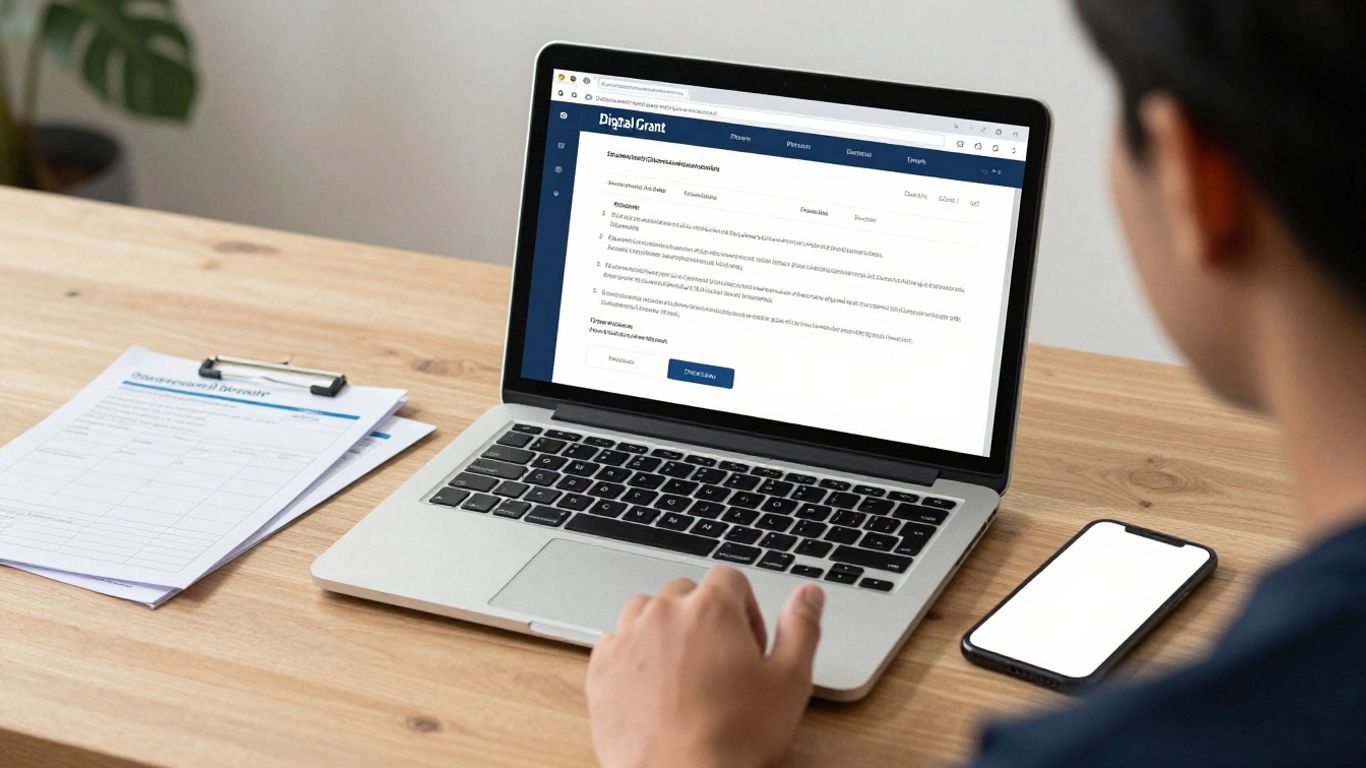
Check the company, ownership, group, location, and financial requirements before selecting a provider. Confirm that the proposed solution is approved and that the vendor is pre-approved for that exact package. This initial check can save weeks of work on an application that cannot proceed.
Audience Intelligence is identified in published guidance as an IMDA-approved vendor and offers guidance through the PSG claiming process. That does not remove the applicant’s responsibility to verify its own eligibility and the current package conditions.
Compare solutions by scope, implementation period, support cap, reporting, and post-project cost. A lower quoted price is not necessarily better if it omits tracking, account access, content approvals, or the reporting needed to judge performance.
Audience Intelligence may be considered where its listed PSG digital marketing offering fits the business requirement. The comparison should still be based on the approved scope and written deliverables, not only on the provider’s marketing description.
Ask for a formal quotation that identifies the applicant, solution, vendor, deliverables, price, GST treatment, and payment terms. The company normally submits the application itself through the relevant government portal using its corporate credentials.
Check every field against the quotation before submission. Small differences in company names, locations, package descriptions, or project values can complicate later verification.
Do not sign a binding contract, make payment, or begin deployment before receiving approval if the programme rules prohibit those actions. Starting early can make the whole project, or part of it, ineligible. This is one of the most consequential timing rules in the process.
Audience Intelligence can guide an applicant through the steps, but the business should wait for the formal approval notice before authorising work. Keep the approval email and attached terms with the project records.
Once approved, complete the work according to the agreed scope and pay the vendor as required. The claim is generally submitted after deployment or service completion, with the supporting evidence requested by the programme. Review the claim against the approval rather than against a later sales proposal.
Build a claim folder from the first day. It is much easier to collect records while the project is active than to reconstruct what happened months later.
A successful claim depends on a coherent evidence trail. The application, approval, quotation, invoice, payment record, and completion evidence should describe the same company, solution, amount, and period. Missing or contradictory records can delay processing even where the work itself was completed.
Prepare the company’s registration details, applicant particulars, corporate credentials, and any ownership or financial information requested. The business profile should be current, and the applicant should have authority to submit information on behalf of the company.
If the business has changed its registered address, directors, shareholders, or bank details, resolve those differences before filing. Consistency is a basic but valuable form of claim protection.
Keep the approved quotation, purchase order where applicable, final invoice, receipts, and bank evidence showing payment to the vendor. The amounts should reconcile, and the invoice should identify the relevant service rather than using an overly broad description.
Where a package includes several cost categories, ask for itemisation. Clear records make it easier to establish which amount relates to the approved solution and which amount is the company’s ordinary operating expense.
Completion evidence can include deployment confirmations, acceptance records, implementation dates, or other documents that demonstrate delivery of the approved service. The evidence should show that the project was not merely proposed or partially discussed.
If the approval requires a minimum usage or deployment period, retain evidence covering that period. A signed completion note alone may not be enough where the programme asks for proof of actual use.
For marketing work, preserve campaign reports, account screenshots, website or landing-page records, content deliverables, and tracking evidence where relevant to the approved scope. Access should be granted in a controlled way, with the business retaining ownership of its accounts and data.
Reports should describe activity and delivery accurately. They do not need to promise a particular commercial result, because grant claims usually concern implementation rather than guaranteed leads or revenue.
Frequent problems include invoices that do not match the approved quotation, missing payment evidence, unclear project dates, incomplete screenshots, and claims for optional work. Another issue is submitting documents that show the solution was started before approval.
Use a final checklist before submission. Have someone who was not involved in the sales discussion compare the claim pack with the approval notice; fresh eyes often catch mismatched figures and missing attachments.
The right provider is not simply the one advertising the largest apparent grant saving. It should be able to explain the approved scope, define the work, report what happened, and state what the business must continue paying after the project. A careful procurement conversation is as valuable as the funding itself.
Verify the vendor’s approval status and the exact solution attached to the quotation. Ask whether every proposed deliverable is within that scope, and request separate pricing for anything that is not. This prevents unrelated services from being bundled into a grant application.
The business should also confirm who submits the application, who owns the claim records, and who is responsible for correcting an inaccurate quotation. Responsibility should be written down.
A proposal should state what will be delivered, when, by whom, and how progress will be reported. For advertising or SEO, that may include campaign setup, optimisation activity, content work, technical changes, and reporting intervals where those items are part of the package.
Avoid vague promises such as “increase visibility” without a definition of the work. Clear deliverables give both sides a fair basis for assessing completion.
Compare the total commercial commitment, not only the supported portion. Check setup fees, media budgets, creative revisions, hosting, analytics, account management, renewal rates, and termination terms.
A package that costs less at the start can become expensive if the business cannot operate it independently afterward. Ask for the full first-year cost and the likely recurring cost as separate figures.
Choose measures that relate to the business model. A medical specialist may care about qualified appointment enquiries, while an event organiser may need registrations and attendance actions. Traffic, impressions, clicks, and rankings can be useful diagnostic measures, but they should not be the only definition of success.
Agree on how conversions will be recorded, which actions count, and how data quality will be checked. Good measurement makes a provider’s work easier to evaluate without turning a grant into a promise of guaranteed sales.
The business should retain ownership or administrative control of advertising accounts, analytics properties, websites, domains, forms, and first-party data. Access for the provider can be granted without surrendering the underlying assets.
Include handover requirements in the contract. A provider should be able to explain how campaign history, creative files, tracking settings, and reports will be returned if the engagement ends.
PSG can reduce the cost of a suitable digitalisation project, but it does not remove commercial risk. The business still needs a realistic budget, internal approvals, usable data, and enough time to manage the work. Treat the grant as one part of a project plan rather than the reason to purchase a service.
Beginning work early is a common and serious mistake. This can include signing a contract, making a deposit, granting deployment access, or asking the vendor to start implementation. If the rules require approval first, even a small preliminary action may affect eligibility.
Set an internal “no start” checkpoint. The project owner, finance team, and vendor should all know that work begins only after the formal approval is received.
Marketing invoices often contain a mix of strategy, creative, advertising spend, software, maintenance, and unrelated consulting. Only the items within the approved solution and cost rules should be treated as potentially supported.
Ask for exclusions in writing and budget them separately. This keeps the company from confusing the grant’s eligible amount with the total amount needed to run an effective campaign.
The grant may help with an initial deployment while leaving the business responsible for renewals, media spend, maintenance, content, or future optimisation. Read the termination, renewal, ownership, and handover clauses before accepting the proposal.
A realistic plan includes the months after reimbursement. The business should be able to continue using the solution, or make a deliberate decision to stop, without being surprised by automatic charges.
High impressions or website visits do not necessarily mean better customers. Define the conversion action, inspect lead quality, and connect reporting to the sales process where possible. A smaller number of relevant enquiries may be more valuable than a large volume of low-intent traffic.
Review performance at a sensible interval rather than reacting to every daily fluctuation. Digital campaigns need enough data and consistent tracking before conclusions are drawn.
Grant percentages, approved packages, deadlines, and administrative requirements can change. Applications and claims may also take time to process, so the company should avoid building a cash-flow plan around an exact reimbursement date unless it has been confirmed.
Check the current programme information before committing funds, preserve every approval and payment record, and allow time for follow-up questions. That approach leaves room for administrative delays without disrupting the underlying marketing plan.
The PSG digital marketing grant guide is best used as a planning framework: verify eligibility, choose a genuinely suitable approved solution, apply before work begins, and keep a complete evidence trail through payment and claim. Funding can make a well-defined digital project more manageable, but clear scope, sound measurement, and careful contract planning still determine whether the investment is worthwhile.
It is support under the Productivity Solutions Grant for eligible businesses adopting approved digital solutions, which may include specified digital marketing packages.
Eligibility commonly depends on Singapore registration and operations, local ownership, SME-related thresholds, solution use, vendor status, and project timing. The current programme rules should be checked before applying.
Businesses should not start work, make payment, or enter a binding commitment before approval where the programme rules prohibit those actions. Early activity can make the project ineligible.
No. Coverage depends on the approved solution and its cost rules. Media spend, renewals, taxes, optional services, and unrelated work may be treated separately or excluded.
The business generally completes and pays for the approved work first, then submits a claim with the required documents. The final amount depends on eligible costs and the approved support terms.
Keep company information, the approved quotation, purchase order if required, invoices, payment records, completion evidence, and supporting proof that the solution was deployed or used.
Compare approval status, solution scope, deliverables, reporting, account ownership, contract terms, total cost, and post-project obligations rather than focusing only on the advertised funding percentage.
Singapore SMEs & clinics
Talk to Adrian, the founder. Tell us your goals and budget. We will tell you straight what we would do first, and what we would not spend money on. See a real result: 2.8× more enquiries for a Singapore clinic →


